
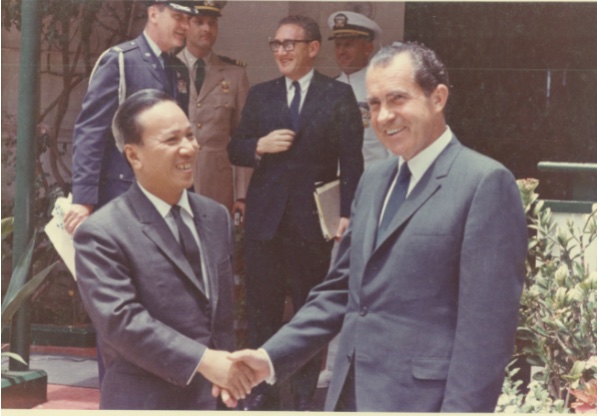
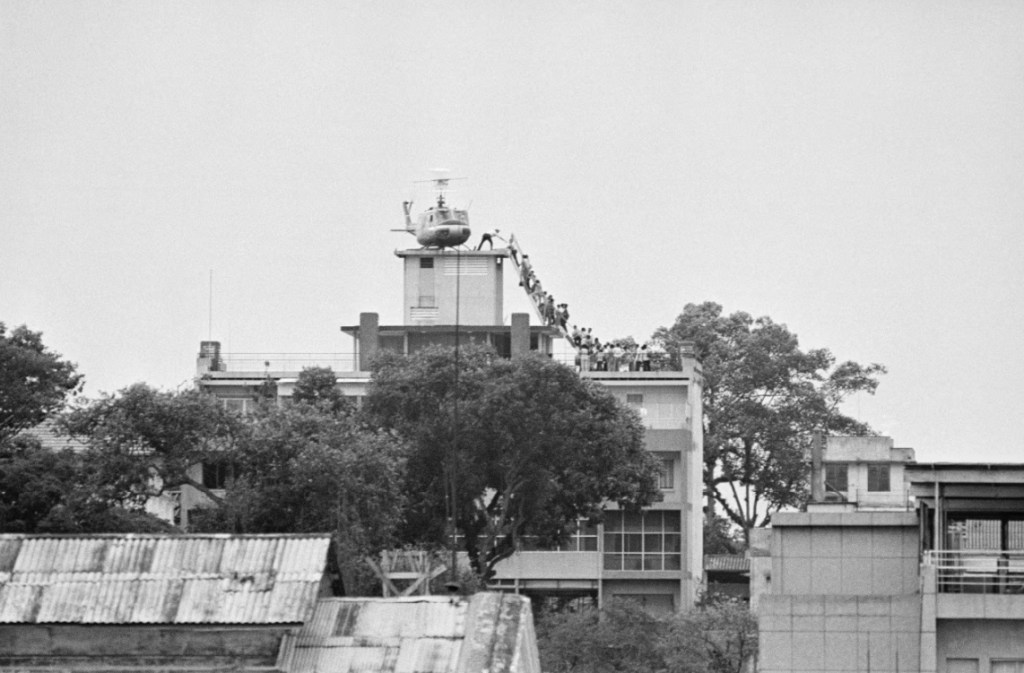
There were five private letters President Richard Nixon of the USA sent to President Nguyen Van Thieu of The Republic of Vietnam (VNCH) before the signing of the Paris Peace Accord in January 27, 1973; they all had the historical significance for the conclusion of Vietnam War. Of these, the letter of January 05, 1973 was the most crucial, President Nixon clearly stated out two mechanisms to guarantee the survival of The Republic of Vietnam: “You have my assurance of continued assistance (1) in the post-settlement period and that we will respond with full force (2) should the settlement be violated by North Vietnam. So once more I conclude with an appeal to you to close ranks with us.” These words were vows not promises, they are binding. The South Vietnam needs either one of the two mechanisms in work to stop the 1975 offensive from the North. Tragically, South Vietnam, out of food and ammunition, died at the end of April 1975. For The US, the vow was broken and it was a sin to break the vow.
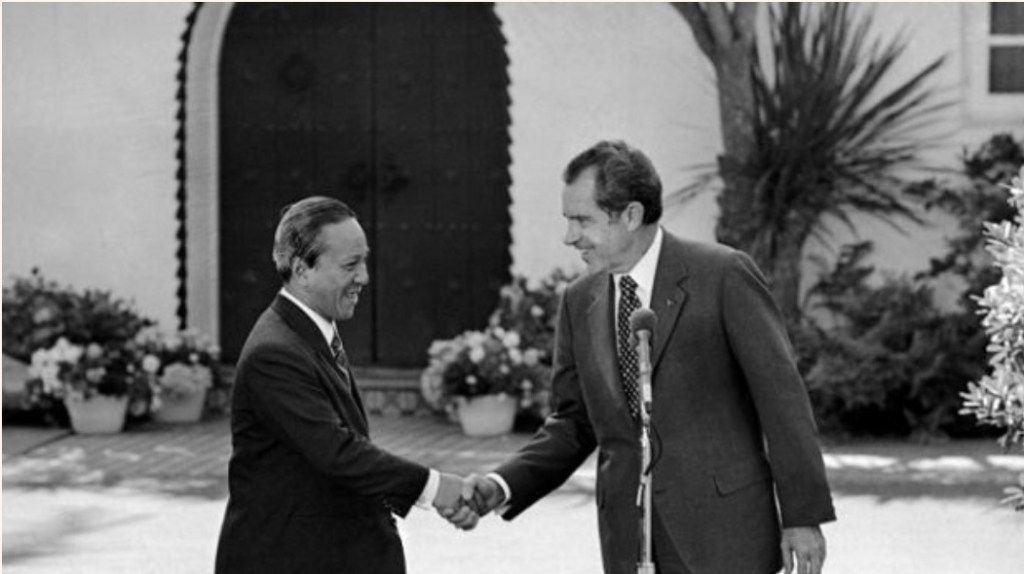
Before resignation due to Watergate, and to keep the vow, President Nixon requested $1.45 Billion aid to South Vietnam for the fiscal year from July 1974 – June 1975, but the 93rd Congress with the Democratic dominance appropriated only $700 million on August 6, 1974, through the Flynt amendment, with 233-157 votes, an overwhelming ratio. If adjusted for inflation, transportation and other personnel expenses, the aid was only $500 million in term of the dollar of 1973 when the Paris Peace Accord was signed and the letter was sent by President Nixon with the assurance of continued assistance to South Vietnam.
The fate of South Vietnam was sealed. The 93rd US congress simply wanted the South Vietnam to die by the end of October 1974, or with luck by the end of 1974. However, the South Vietnam army did very well throughout the year of 1974, dealt a crushing blow to North Vietnam army at the end of 1974 in the battle of Thượng Đức, Quảng Nam. Mel Laird, Defense Secretary in the Nixon administration wrote in a 2005 article in the Foreign Affaires magazine: “Congress snatched defeat from the jaws of victory by cutting off funding for our ally (South Vietnam) in 1975.”
The timing when to release these private letters was of critical consequences. During the trip on Feb. 1975, Tran Van Lam, Minister of Foreign Affairs of the Republic of Vietnam, revealed President Nixon promised to react vigorously to communist violations. Several senators immediately jumped to Lam revelations concerning secret commitments to South Vietnam that Congress had never briefed on. Had the “January 05” letter been released in Feb. 1974 instead of Feb. 1975, the 93rd Congress would hesitate to issue the death sentence to the Republic of Vietnam. And there was a good possibility that the Nixon presidency was also saved – an unexpected happy ending.
But, like two sides of a coin, emotionally and romantically, the private letter in January 05, 1973 is also about a love written in sky stars – the story of the cowherd and weaver girl. It’s also like a farewell murmuring of a departing GI to a trembling Miss Saigon: “I miss home, I have to go home, but I will provide care for you, I will punish anyone who harms you, forget me not.” Richard Armitage, Deputy Secretary of State in the George W. Bush administration, compared the US withdrawal of aid from South Vietnam to a “pregnant lady, abandoned by her lover to face her fate.”
Forget me not! The US still owes the children of Republic of Vietnam a moral obligation. You break it you own it!
By Lê Như Tuấn of the Class 30 VNMA, Oct. 22, 2025
Letter from Richard Nixon to Nguyen Van Thieu
- by Richard Nixon
- January 05, 1973
Dear Mr. President:
This will acknowledge your letter of December 20, 1972.
There is nothing substantial that I can add to my many previous messages, including my December 17 letter, which clearly stated my opinions and intentions. With respect to the question of North Vietnamese troops, we will again present your views to the Communists as we have done vigorously at every ether opportunity in the negotiations. The result is certain to be once more the rejection of our position. We have explained to you repeatedly why we believe the problem of North Vietnamese troops is manageable under the agreement, and I see no reason to repeat all the arguments.
We will proceed next week in Paris along the lines that General Haig explained to you. Accordingly, if the North Vietnamese meet our concerns on the two outstanding substantive issues in the agreement, concerning the DMZ and type method of signing and if we can arrange acceptable supervisory machinery, we will proceed to conclude the settlement. The gravest consequence would then ensue if your government chose to reject the agreement and split off from the United States. As I said in my December 17 letter, “I am convinced that your refusal to join us would be an invitation to disaster-to the loss of all that we together have fought for over the past decade. It would be inexcusable above all because we will have lost a just and honorable alternative.”
As we enter this new round of talks, I hope that our countries will now show a united front. It is imperative for our common objectives that your government take no further actions that complicate our task and would make more difficult the acceptance of the settlement by all parties. We will keep you informed of the negotiations in Paris through daily briefings of Ambassador [Pham Dang] Lam.
I can only repeat what I have so often said: The best guarantee for the survival of South Vietnam is the unity of our two countries which would be gravely jeopardized if you persist in your present course. The actions of our Congress since its return have clearly borne out the many warnings we have made.
Should you decide, as I trust you will, to go with us, you have my assurance of continued assistance in the post-settlement period and that we will respond with full force should the settlement be violated by North Vietnam. So once more I conclude with an appeal to you to close ranks with us.
Sincerely,
RICHARD NIXON



 K30 TVBQGVN
You must be logged in to post a comment.